

Data center investments have proven resilient in periods of economic volatility—and they’re only going to become more essential and important into the future.
May 27, 2021
Data center investments have proven resilient in periods of economic volatility—and they’re only going to become more essential and important into the future.
During a time of unprecedented uncertainty and disruption, how should businesses approach the “new metrics of performance,” and how will ESG evolve in 2021?
If history is a guide, the time to invest in hotels is when things look bleak. This appears to be one of those times.
The pandemic has heavily impacted the hospitality sector, but a growing wave of non-traditional investors has shown heightened interest in getting a piece of the evolving industry.
As cities in the US adapt to a new normal, city leaders, planners, developers, and investors have a new challenge: to define the “new normal” of the built environment. And though it stands unique among American cities, Washington, DC could have answers for our collective urban futures.
The COVID-19 pandemic highlighted the advantages of single-family living. It appears to have accelerated an existing trend of migration to less dense, more affordable areas.
Just as the pandemic has accelerated changes in culture, it has underscored the symbiosis between the built environment and the natural world. What’s the key to “greening” the next generation of commercial real estate?
The investment community can have an active role in an equitable economic recovery—but it will require the necessary discomfort of recasting the traditional risk/return framework.
Though leverage is an important part of capital funding, it’s important to ask LPs if (and how) they should take control of their real estate leverage.
The events of the past year drove businesses to confront racial inequity, but some still shy away from the challenging language needed to make real restorative and economic progress.
In a post-COVID world, it is important to understand what a user wants, in other words, the people we interact with o a daily basis. How do we define a user and how does it impact real estate value?
As the cities cautiously re-open into the late phase of the pandemic, writer and urbanist Richard Florida believes that metros have a unique opportunity to reimagine and redefine what a “central business district” will look like in the new normal.
Non-US-based investors face the disclosure regime of the Corporate Transparency Act. What do you need to know?
As proptech continues to transform commercial real estate, discoveries happening on the venture side provide key insights on the future of ESG, portfolio optimization, cost savings, and human capital.
The global pandemic has disrupted our ability to meet in-person with clients, colleagues, and collaborators—but according to Bill Himmelstein of Tenant Advisory Group, this is a beginning for how we can redefine relationships, not the end.
Cross-border investing faces several logistical challenges of COVID-19 including limited travel, empty office spaces, and virtual chats.
The COVID-19 pandemic forced many investors to restructure their agendas. What does it mean to “reset real estate,” and what role should investors have in imagining in the future of the world?
The COVID-19 pandemic forced many investors to restructure their agendas. What does it mean to “reset real estate,” and what role should investors have in imagining in the future of the world?
Ethics need to be front-and-center during times of crisis and uncertainty. What should this look like in the world real estate investing?
As the world emerges from the pandemic into the new normal, what are the key lessons of novelty and economic evolution the real estate ecosystem should understand today in order to better plan for tomorrow?
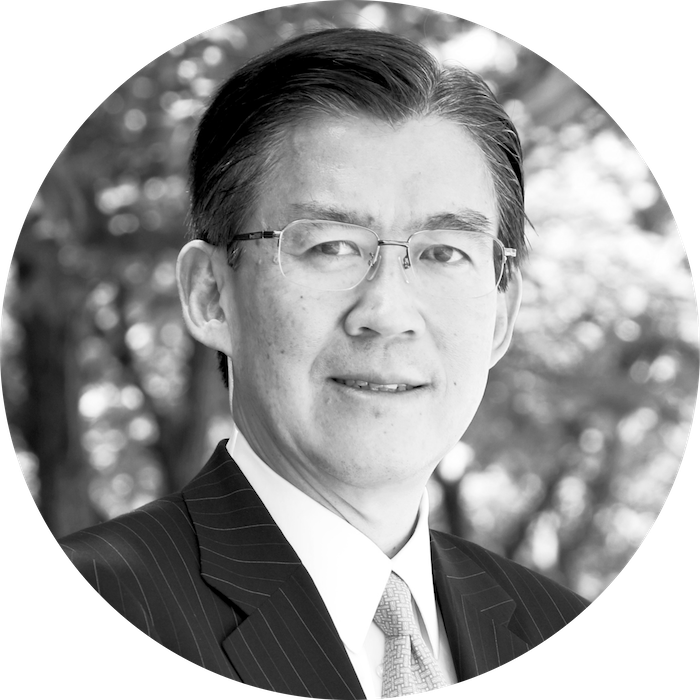
Tomikawa served as Managing Officer and Chief Operating Officer of the Real Estate Solution Services Division until 2015. Between 1989 and 1995 he was Vice President at Mitsui Fudosan (New York). He was one of the founding members of Mitsui Fudosan Investment Advisors established in October of 1997, President & CEO in 2015 and Chairman from 2023.
Tomikawa was an adjunct lecturer at Keio University between 1998 and 2007, a member of University of Cambridge’s Real Estate Finance Advisory Board between 2004 and 2007, and Chairman of ULI Japan between 2016 and 2018. Tomikawa received B.A. in Economics from Keio University and MBA from Harvard Business School.
Enter your email address and password associated with your membership to log into AFIRE.org. If you are unable to login through this popup, go to https://members.afire.org to reset your password. For questions, contact us.